
If you’re considering investing in solar for your home, you’re likely already aware of the most practical reasons for doing so: saving money, reducing the uncertainty of utility costs, and making a smart long-term investment with considerable return. However, you may not want to jump into such a big investment without understanding the full picture of what to consider when going solar.
So, let’s discuss the things most thoughtful homeowners weigh when evaluating solar:
- How do I know if solar is worth it for my home?
- How much does solar cost upfront in New Mexico?
- Does solar really save money in the long-term?
- Who can I trust to install solar in New Mexico?
- How long do solar panels last in New Mexico’s climate?
- What happens during a power outage? Solar + battery storage options
All great questions and the kind that most homeowners would want to ask when considering a long-term investment like solar panels.
How much does solar cost upfront in New Mexico?
The upfront cost for solar is typically the biggest hesitation, and for good reason. A major home improvement project deserves scrutiny. But, unlike most home improvement projects, solar is unique in that its cost pays for itself by way of reduced energy costs.
While the cost for solar is dependent on several factors including the number of solar panels required to meet your energy needs, age of main electrical panel, and complexity of the project, systems start at around $12,000, and the average systems range between $19,000-30,000. You may be pleasantly surprised to learn that many people take advantage of financing that spreads the investment over time, often creating a monthly payment that replaces what they were already paying the utility.
In other words: You don’t add a new bill — you redirect an existing one.
Once you factor in available incentives and tax credits, the actual out-of-pocket cost can be significantly lower than many people expect. When the numbers are laid out clearly (keep reading to see), solar becomes less of a big purchase and more of a structured, long-term energy investment.
What about maintenance and hidden costs over time?
Another common concern is ongoing upkeep. Most homeowners want a system they don’t have to constantly think about.
Solar systems, by design, are simple. With no moving parts, maintenance needs are minimal. For many New Mexico homeowners, natural rainfall takes care of cleaning the panels. With modern monitoring tools, performance is easy to keep an eye on — and we can support you if anything looks off.
Unexpected maintenance costs are rare, and reputable installers are transparent about what to expect, including ensuring your roof is a good fit. For most homeowners, solar ends up being one of the lowest-maintenance components of their home.
How much does solar really save? How long does it take to see a return?
It’s natural to think in terms of payback periods. After all, this isn’t just about being environmentally conscious — you want the numbers to make sense and know that solar is a smart investment. Instead of viewing solar strictly as a payback equation, many homeowners recognize that electricity from the grid isn’t a fixed cost — rates continue to rise over time and staying dependent on the utility for electricity means committing to rising rates year after year.
Solar gives you more control by allowing you to lock in predictable energy costs for the next 30+ years compared to buying electricity from the utility company that isn’t a fixed cost. The cumulative savings typically outweigh the cost of the system.
Example: Comparing cost of solar vs grid in New Mexico
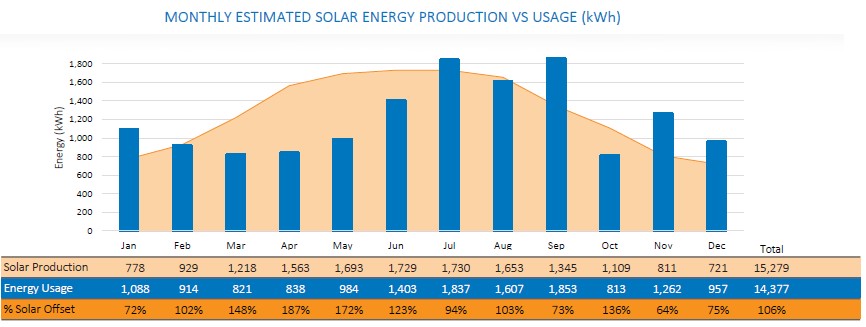
- Say a 10.4 kilowatt (kW) system costs $27,000 and will produce 415,374 kilowatt-hours (kWh) over a 30-year warranty. That would come out to $0.065/kWh ($27,000 / 415,374).
- New Mexico’s largest electrical company, PNM, has an average rate of $0.13/kWh.
- If you compare $0.065 per kWh from your solar system to $0.13 bought from the utility, you can see that the levelized cost of energy (LCOE) from your home’s solar panels is less than the utility charges today, before even accounting for the historical average annual increase of 4.5%
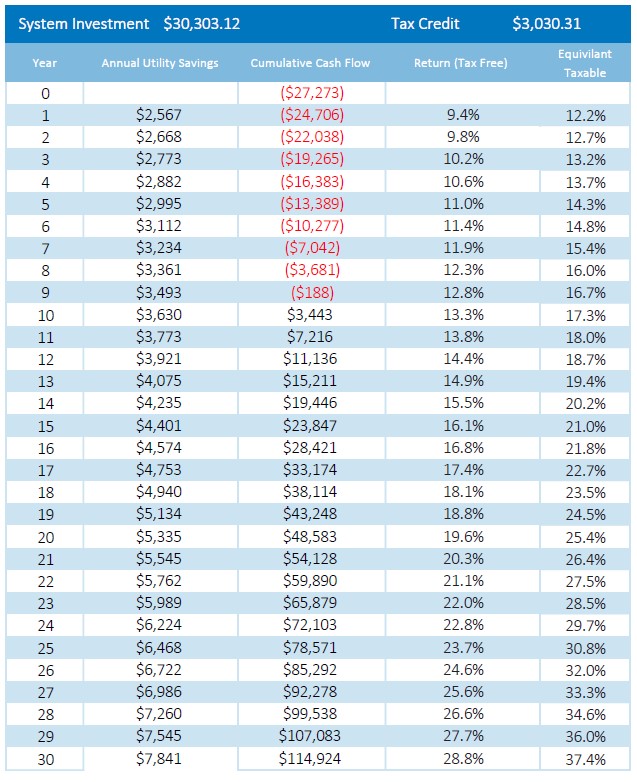
- The system mentioned above can offset a home’s current PNM bill of $2,716 annually. So, if you amortized the system cost against the annual savings, factoring in the increase in PNM rates over time, it would be cumulative cashflow positive after 9 years.
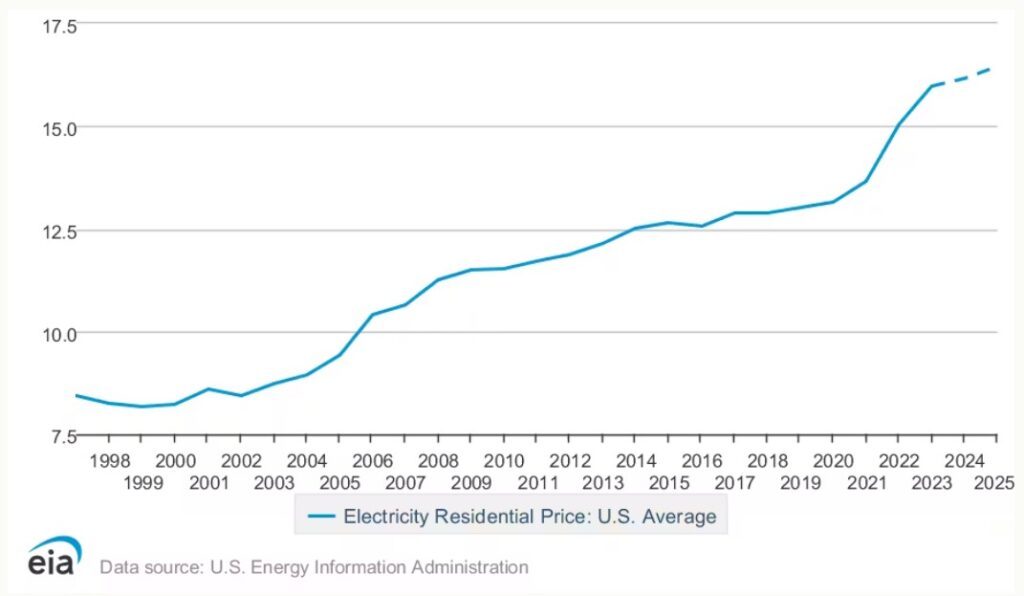
Homeowners who value long-term financial planning often find this model far more appealing than remaining tied entirely to rising utility costs, especially as electricity prices in the U.S. have significantly outpaced overall inflation, including New Mexico, where PNM was approved a two-phase rate increase through 2026.
Who can I trust to install it? Choosing the right partner.
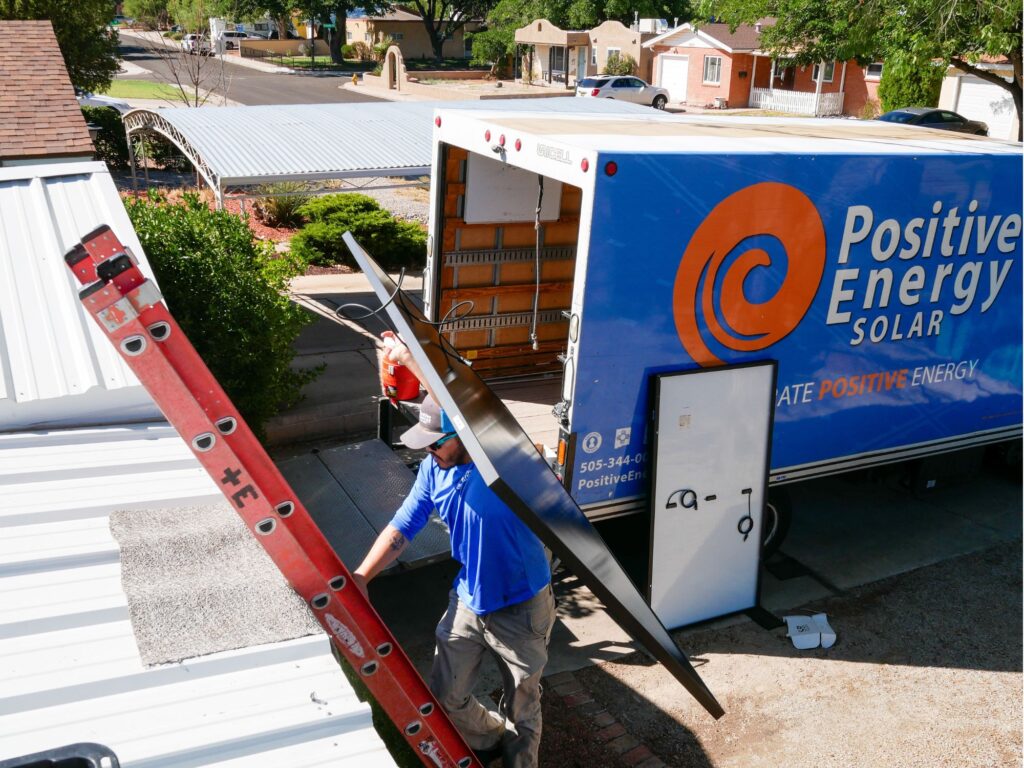
This is one of the smartest questions anyone can ask. The quality of your installation — and the reliability of the company behind it — matters just as much as the equipment itself. You want to find the best solar company. One that you can trust.
Trustworthy installers:
- communicate clearly and honestly
- provide detailed proposals without inflated claims
- stand behind their workmanship
- have local expertise and long-term presence
- provide post-installation support
- prioritize customer experience, not transaction volume
Choosing the right partner matters. A solar system isn’t a 2-year consumer gadget — it’s a multi-decade investment and infrastructure on your home. Choosing a reputable company ensures your system is designed properly, installed correctly, and supported for decades. This is the difference between solar being a smart investment and a frustrating experience.
Will the equipment really hold up over the years?
Given New Mexico’s harsh sun, wind, dust, and seasonal shifts, it’s reasonable to wonder whether solar panels can withstand it and how they perform long-term. Fortunately, modern solar panels are engineered for environmental resilience. Most come with long-term performance warranties and maintain strong, predictable power outputs for 25 years or longer.
Positive Energy systems take things a step further by providing Third-Party Limited Warranty Coverage through SolarInsure, which backstops manufacturers’ warranties, meaning your equipment will still be protected if they go out of business. It’s also transferable, so if you sell the property on which your system is located, the new owners can reap the rewards of the warranty.

Homeowners often find reassurance in knowing that solar panels are built strong and tested for the elements — they’re one of the most proven and durable components of modern home energy infrastructure. Regardless of what the future holds, you’re covered with Positive Energy.
What happens if the power goes out? Solar + battery storage.
As power outages become more common across the country, more homeowners are now also thinking about energy security, not just savings. Solar alone won’t keep your home powered during a grid outage, but solar paired with battery storage can.
Pairing solar with home battery storage provides:
- backup power during outages
- the ability to run essential circuits
- protection for refrigerated food
- the ability to keep working or stay connected
- peace of mind for medical or safety-critical devices
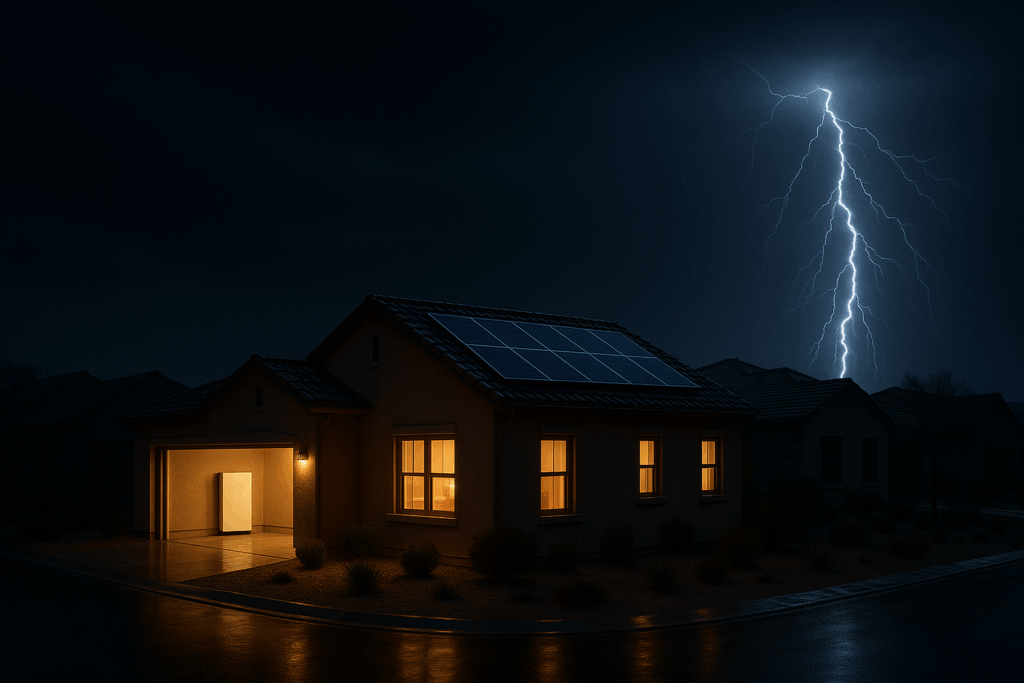
This is no longer seen as an extravagance — but as thoughtful planning for the unexpected, providing peace of mind and preparedness.
So, is solar worth it for you? Deciding with clarity.
Ultimately, it depends on your home, your energy usage, your goals, and your comfort level with long-term planning. But when homeowners see clear numbers, understand their options, and work with a reputable installer, the decision typically becomes much easier.
If you’re the kind of person who likes to understand the full picture before making a commitment and wants to make a financially confident decision, the best next step is free a customized assessment based on your roof, your utility usage, and your goals. We offer free, no-pressure consultations because homeowners deserve accurate information and discussions built around educating you, not persuading you.

You’ll receive:
- a detailed analysis of your home’s solar potential
- projected production and savings
- information about incentives and financing
- real performance data
- honest guidance based on your goals
And if your home isn’t a good candidate — we’ll tell you that too. No obligations. No rushed decisions. Just clarity.
When you’re ready to explore whether solar makes sense for your home, we’re here to help you make that decision with confidence.
An energy decision that supports your future
Solar is ultimately about control — control over expenses, resilience in unstable grid conditions, and ownership of a resource your home already receives for free every day: sunlight.
If you’d like to explore whether solar makes sense for your home and your finances, you can reach out for a free proposal and analysis — with zero obligation. We’re here to help you make the most informed decision possible, based on facts, transparency, and long-term thinking.
If you’re thinking about having solar panels installed in New Mexico, think Positive Energy.