
Power outages don’t all look the same, but they are becoming more common. Sometimes it’s a short disruption during a summer storm. Other times it’s a multi-day outage caused by extreme weather, grid failures, or wildfire shutoffs. Many homeowners are looking for reliable backup power as well as protection from rising electric rates.
How prepared you are – and how much stress you experience – depends largely on which backup power solution you choose.
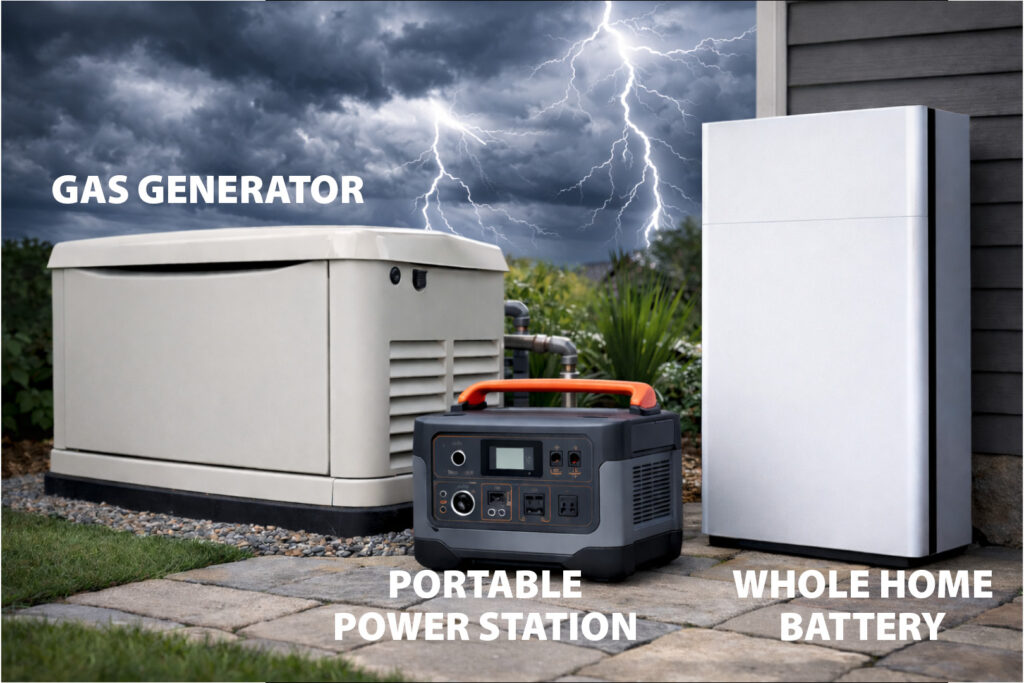
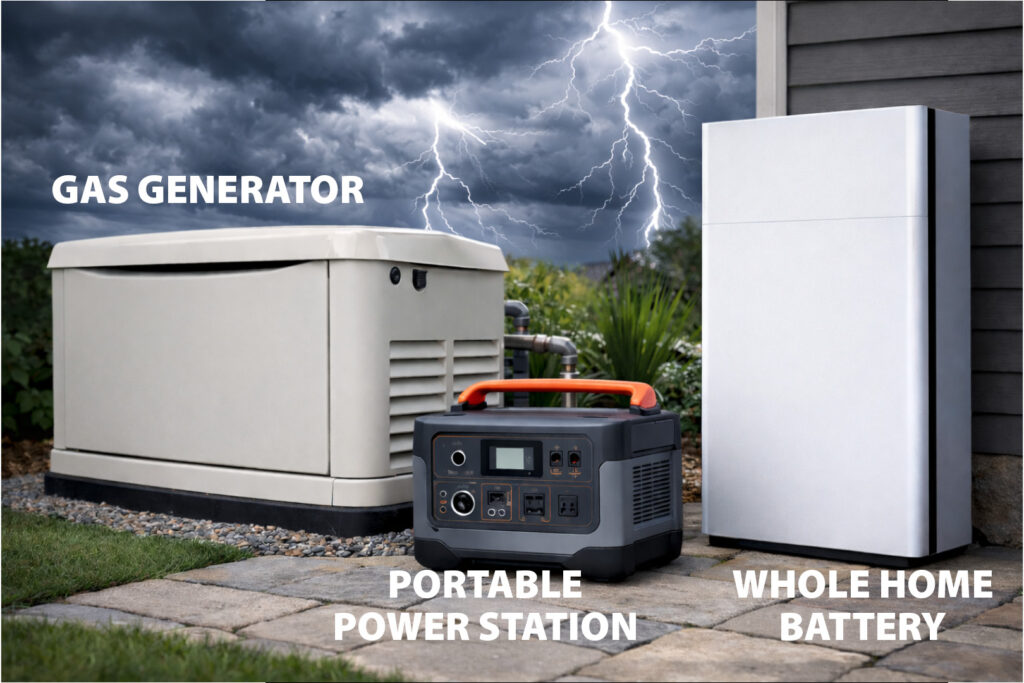
Today, homeowners generally consider one of three options:
1. Standby gas generators (like Generac)
2. Portable power stations (EcoFlow, Jackery, Goal Zero, Bluetti)
3. Home battery systems (Tesla Powerwall, Enphase, PointGuard)
Each serves a different purpose. Understanding those differences helps you choose a solution that actually fits your home, your budget, and how you live.
Option 1: Standby Gas Generators – Reliable Power, As Long as Fuel Flows
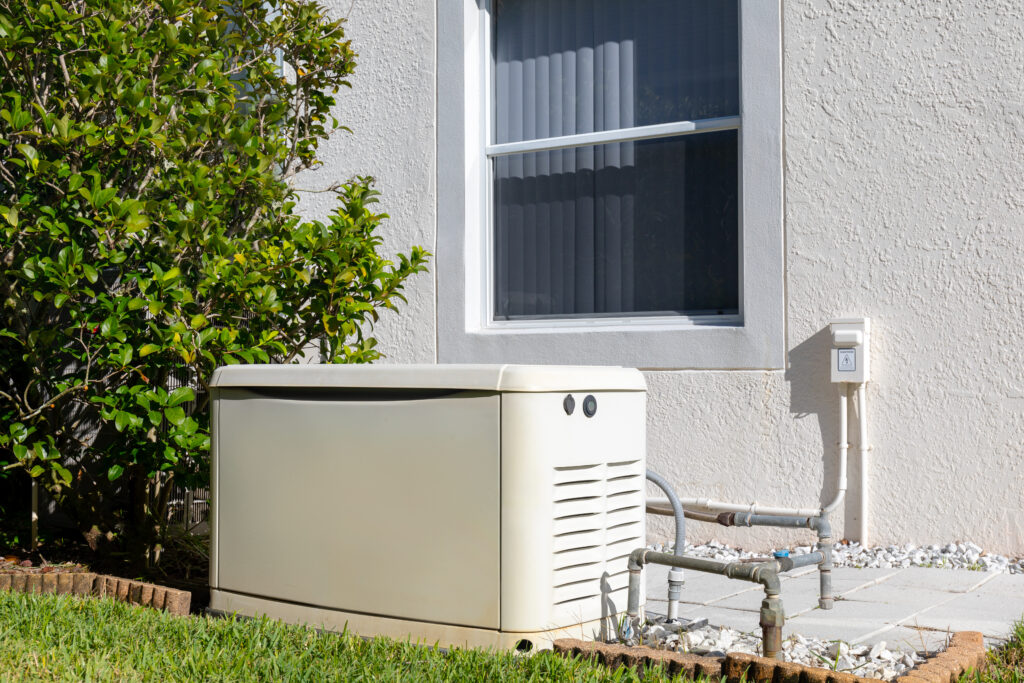
What is a standby generator? A standby gas generator is permanently installed outside your home and connected to your electrical panel through an automatic transfer switch (ATS). When the grid goes down, the generator automatically turns on – even if you’re not home.
When generators make sense. Generators are best for homeowners who want:
- Automatic outage response
- Coverage during short-to-medium outages
- A solution independent of solar
They can keep essential loads running during outages, including:
- Refrigerator and freezers (no spoiled food)
- Security systems
- Internet and communication devices
- Medical or health equipment
- Aquariums, pet enclosures, and other sensitive systems
Cost
- Typical installed cost: $8,000-$16,000
- Larger or more complex systems: $10,000-$23,000+
Pros
- Fully automatic – no action required
- Can power many or all household loads
- Familiar technology
- Works well for longer outages if fuel is available and properly maintained
Cons
- Requires a continuous supply of natural gas or propane
- Fuel supply may be disrupted during widespread emergencies
- Ongoing maintenance and periodic testing required
- Cannot help reduce electric bills or manage time-of-use rates
- Uses fossil fuel and produces emissions
Best for: Homeowners who want automatic backup power and are primarily concerned about outages – not energy savings or long-term energy independence.
Option 2: Portable Power Stations – Flexible, Affordable, and Manual
What is a portable power station?
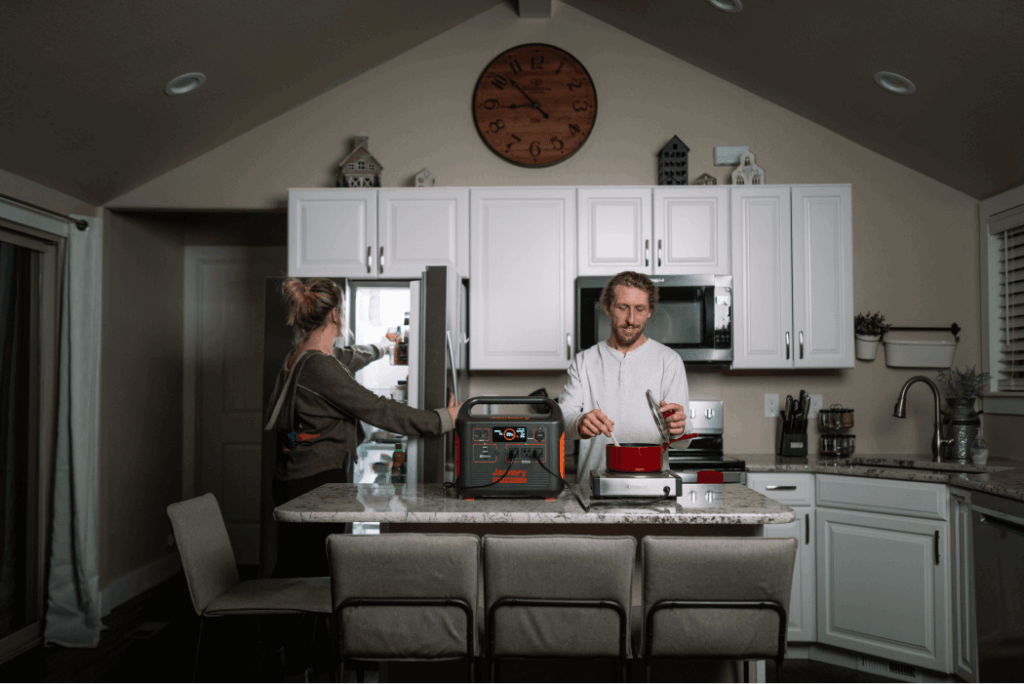
Portable power stations (sometimes called a solar generator) are plug-and-play battery systems that power devices through onboard outlets, USB ports, or – in some cases – limited home backfeeding with additional equipment. You may be used to seeing them used for camping.
When portable power stations make sense. These are best thought of as short-term, manual backup solutions.
They can work well in use cases where:
- You’re home during an outage and can plug things in
- You want to power phones, laptops, CPAP machines, or a refrigerator for a limited time
- You camp, travel, or live part-time off-grid and can get additional use from it
Cost
- Typical upfront cost: $1,500-$5,000, depending on size and features.
Pros
- Lower upfront cost
- Portable and versatile
- No fuel required (can be charged by wired solar panel or kept charged before outage occurs)
- Useful beyond home outages (camping, RVs, job sites)
Cons
- If you’re not home, essential loads won’t stay powered
- Must be turned on and plugged in manually (no automatic transfer switch)
- Limited capacity and runtime
- Shorter lifespan and warranties than home batteries
- May not legally or safely backfeed into home wiring without professional setup
Real-world scenario: If the power goes out while you’re at work, your fridge won’t stay on – meaning spoiled food and potential messes when you return.
Best fit for: Budget-conscious homeowners, light-duty backup or temporary solutions
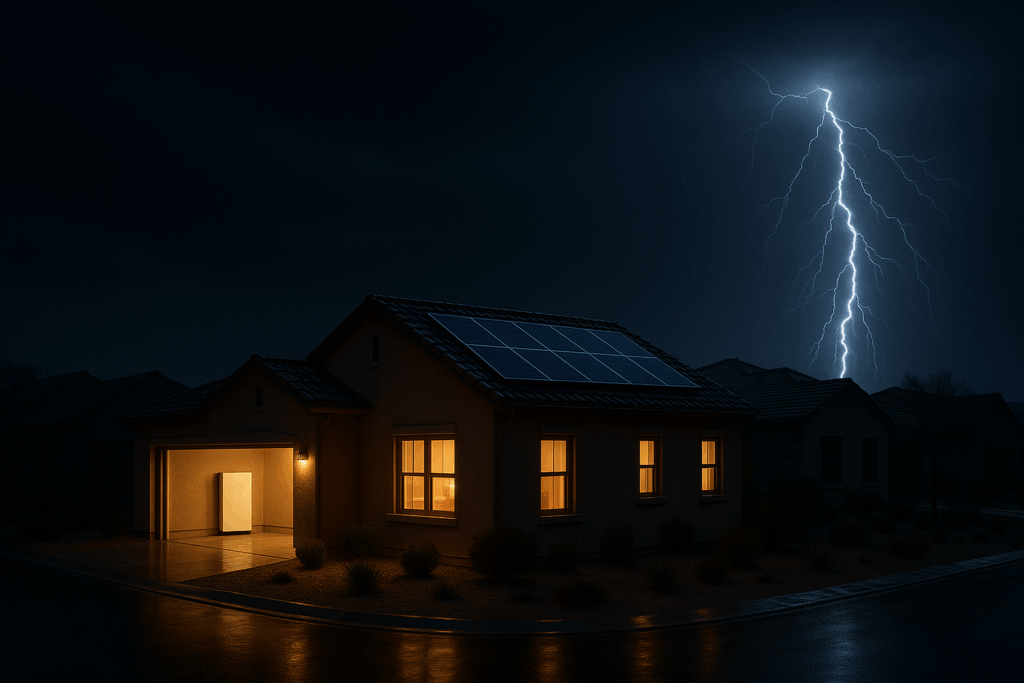
Option 3: Home Batteries – Backup Power and Smarter Energy Use
What is a home battery system?
A home battery is permanently installed and connected to your electrical system with an automatic transfer switch, just like a standby generator. The key difference is what’s inside: a smart energy management computer and ability to continuously recharge with solar.
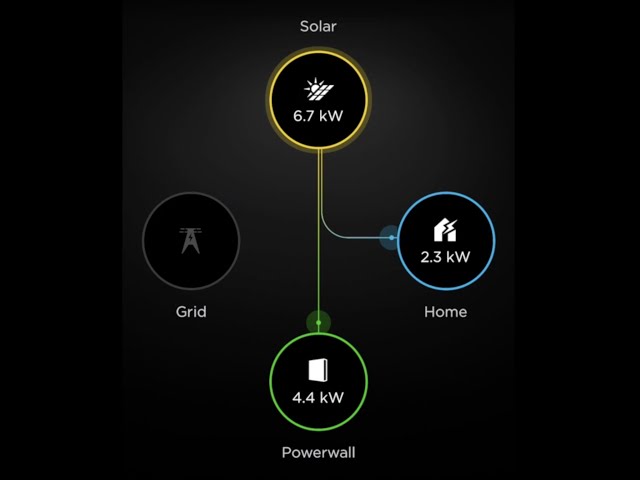
When home batteries make sense. Home batteries solve two problems at once by creating backup power during outages and protection from rising electricity costs.
They can:
- Automatically power essential loads during outages
- Store solar energy for use at night or during outages
- Reduce electric bills by avoiding high utility rates during peak hours
- Prioritize solar energy first, then battery, then the grid
Cost
- Typical installed cost: $15,000-$30,000 before incentives
- Cost varies based on battery quantity, home size, and usage needs
Pros
- Fully automatic outage protection
- No fuel dependency (A battery paired with solar can recharge itself daily)
- Silent, emission-free
- Enables time-of-use savings and energy arbitrage
- Works seamlessly with solar
- Long warranties and predictable performance
- Improves energy resilience and independence
Cons
- Higher upfront cost than other solution
- Multiple batteries may be needed for whole-home backup
- May not have appropriate area for home battery installation
The most important distinction: Solar + home battery is the only truly self-sufficient energy solution.
Best fit for: Homeowners who want automatic outage protection, long-term control over energy, resilience, and independence from utility volatility.
Side-by-Side Comparison: Generator vs Portable Power Station vs Home Battery
| Feature | Standby Gas Generator | Portable Power Station | Home Battery |
|---|---|---|---|
| Automatic during outage | ✅ Yes | ❌ No | ✅ Yes |
| Works if you’re not home | ✅ Yes | ❌ No | ✅ Yes |
| Fuel required | ✅ Yes (gas/propane) | ❌ No (but requires method to recharge) | ❌ No |
| Reduces electric bills | ❌ No | ❌ No (limited capability) | ✅ Yes |
| Runtime | Longer duration (with fuel) | Limited duration | Longer duration (can be indefinite when properly paired with solar) |
| Typical lifespan | Long (with regular maintenance) | Shorter | Long, 10+ year warranty |
| Upfront cost | $$ | $ | $$$ |
Choosing the Right Solution Comes Down to One Question: What problem are you actually trying to solve?
- If you want automatic outage protection at a slightly lower upfront cost and are comfortable relying on fuel → a standby generator may make sense.
- If you want occasional backup power and flexibility without major installation, and don’t require automatic backup power → a portable power station can work.
- If you want backup power, peace of mind, lower electric bills, and long-term energy independence → a home battery (especially paired with solar) is in a different category entirely.
Power outages are unpredictable and utility energy costs continue to increase. The right solution is one that fits your lifestyle, priorities, and how much control you want over your energy future.
Want to discuss your options for solar & home batteries? Schedule a free consultation and estimate with New Mexico’s trusted solar and energy storage experts.